Categories
Uncategorized

What Exactly Are “Fire Ladders” ?

Fire-ey Questions, Sept-Oct-Nov 2025

By Amy Dyson and Judy Harrington, Co-Chairs, Kensington Fire Safe (KFS)

Kensington’s Fire Safe Council will share researched answers to your inquiries and over 85 questions posed at November’s Montezuma Fire forum. Send fire-related questions to info@kensingtonfiresafe.org.  

Q #1 Why are firefighters talking about “ladders” in our yards?

A:  Six homes destroyed in a recent Lakeview fire, 1,600 in L.A. last year…while we don’t know exactly how each ignited, recent fire safety articles and presentations have warned that “ladders” can be a major source of damage.  What are they?  Anything flammable that leads to your home.  Major culprits include wood fences that ignite easily bringing the flames closer to window frames, eves or other flammable parts of a home.

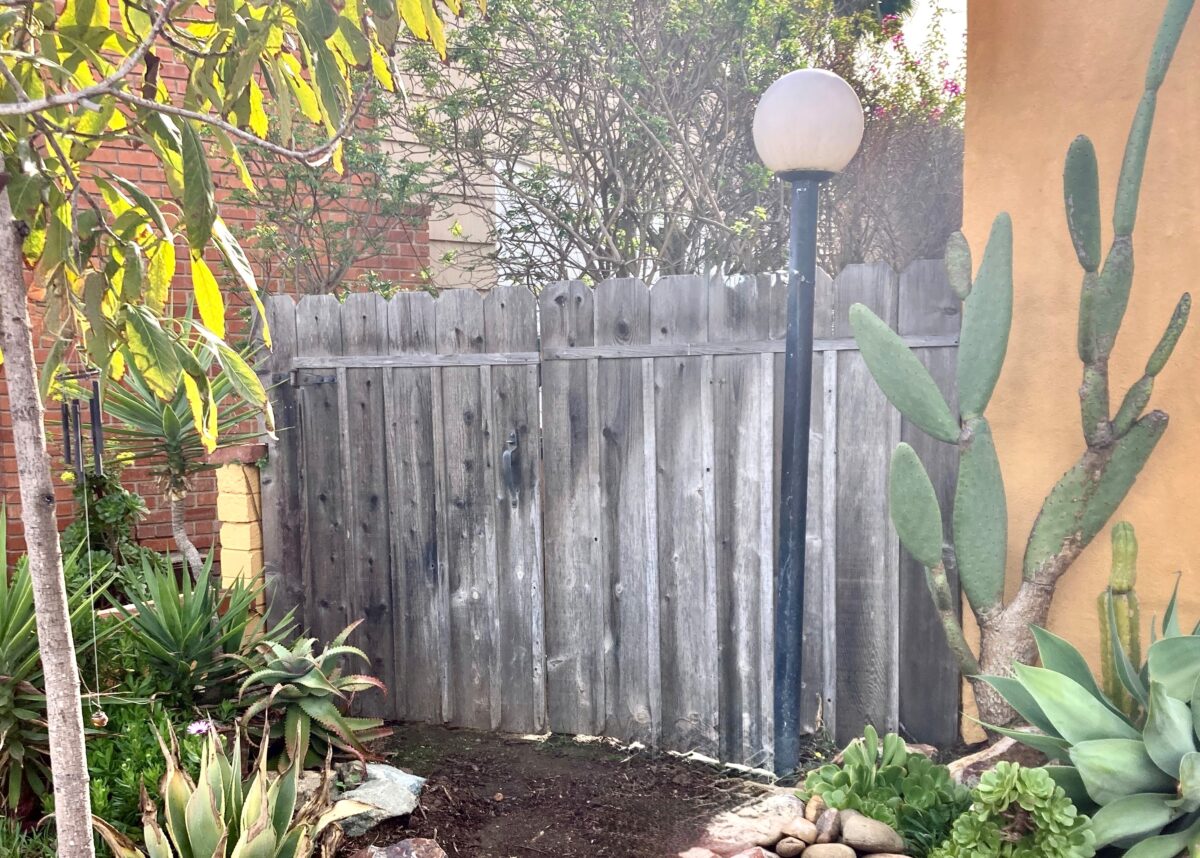
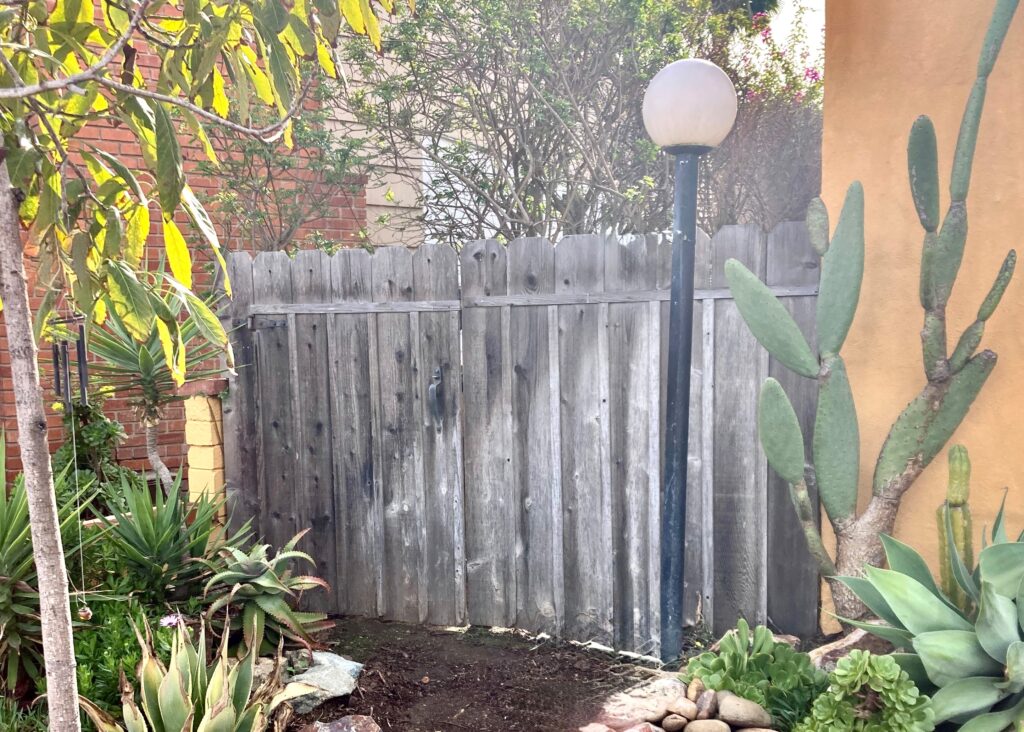
If this old fence ignited in a wildfire, it could bring flames to a wood window frame three feet away. Tree branches and other close plants could also be moved out of the five-foot zone zero next to the structure to increase fire safety.

Is vinyl fencing better than wood? It is supposed to be relatively fire-resistant and more difficult to ignite.  If it does ignite, it may burn slowly, releasing less heat than some other materials.  However, we’ve been told that burning vinyl could produce toxic fumes including hydrogen chloride which might spread the fire further and cause respiratory problems for residents and firefighters. Consider non-combustible materials like steel or wrought iron for your fence replacement. You could also investigate possible flame resistant-coating/primer at the link below. As always, do your own research!

Other possible ladders include flammable vegetation like tall grasses, shrubs and any tree branches that come within ten feet of a structure, allowing flames to climb up to your home.  This potentially lets a “ground fire” become a more destructive and rapidly spreading “crown fire.”  Solution? Prune back branches at least 10 feet from your home. Remove combustible plants, mulch and debris in “Zone Zero” – the first five feet from flammable structures.  Instead of wood mulch, consider hard scape such as pavers, concrete or rocks in this area.  Shredded redwood i.e. “gorilla hair” mulch has been reported as less flammable if you keep it well-irrigated with overhead watering, but how many of us are doing that with our water rates?

Two lists on Kensingtonfiresafe.org may help your efforts to reduce flammable yard growth: one lists landscape designers who completed a fire-resistant gardening course.  The second list includes Kensington-resident recommended gardeners and landscapers.

What else can I do if it’s inevitable that we’ll have a fire eventually?

One of our KFS members took part in “Home Inspection Zone” training that’s normally given to firefighters, and had some additional and very specific recommendations:

  1. 1/8” screening over eve, gable and ridge vents and any opening to crawl space or, check out Vulcan Vents which are supposed to close up when heated.
  2. Clean up roof, gutters and other sites of accumulated debris and leaves.  Where they’ve collected is where burning embers are likely to fall.  
  3. Weather strip exposed nooks and crannies
  4. In the event of a fire and possible evacuation:
    1. Move cushions, plastic or wooden patio furniture, door mats, umbrellas, trash cans, cars, RVs and anything else that’s flammable away from your home
  5. Close all windows and doors; leave outside lights on
  6. Turn off propane tanks
  7. Grab your pre-prepared list of who grabs what. You don’t want to spend precious time deciding that now.

And next month will be the anniversary of the Montezuma fire where we lost a house just across Fairmount Avenue in Alvardo Estates.  A good reminder that it can happen here!

Links to learn more:

CALFIRE’s wildfire safety steps:  https://readyforwildfire.org/prepare-for-wildfire/hardening-your-home/

Fire-resistant Fencing and Gates by Marin Fire Safe. https://firesafemarin.org/harden-your-home/fire-resistant-fencing/

Paint wooden fences or structures with FireGuard flame resistant coating/primer. https://shieldindustries.com/fireguard/

Eco-appropriate Homescaping for Wildfire Resilience: compare specific retrofits to cost and priority for safety. https://defensiblespace.org/house/house-upgrade/

FireIce is a spray-on formula that creates an oxygen-blocking gel to starve a fire of oxygen, and is supposed to be safe for people and plants.  It’s expensive but apparently available to homeowners in an aerosol spray, a home defense unit for pressure washers, and also refillable fire extinguishers from their website, Amazon or other distributors.  www.fireicesolutions.com

Categories
Fire Safe News MetroView Fire-ey Questions

Why were over 30,000 acres removed from the City of San Diego’s former High Fire Hazard Severity Zone?

Fire-ey Questions, June-July-Aug 2025

By Judy Beust Harrington and Amy Dyson, Co-Chairs, Kensington Fire Safe (KFS)

Kensington Fire Safe Council will share researched answers to your inquiries and over 85 questions posed at November’s Montezuma Fire forum. Send fire-related questions to info@kensingtonfiresafe.org.  

Q #1 Will increased safety regulations apply to the 30,000+ acres removed from our former “High Fire Hazard Severity Zones?”

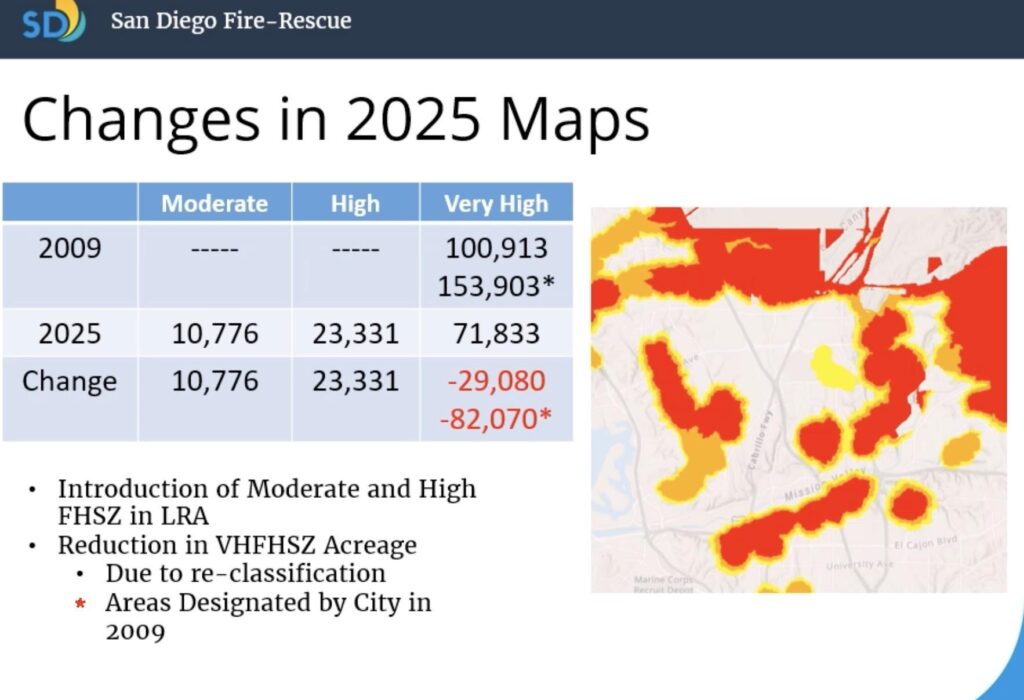
A:  Recently-issued State Fire Hazard maps shocked many by eliminating so many acres from the “Very High Fire Hazard Severity Zones,” meaning a host of fire safety building, land use, inspections and other regulations would no longer apply in these eliminated areas. 

Concerned local Fire Safe Councils invited fire officials to address these concerns at a May forum where CAL FIRE Chief Brian Barkley explained new California legislation required the State Fire Marshal to define not just “Very High”  hazard zones, but for the first time, also “High” and “Moderate” zones. The maps are final for the mostly rural “State Responsibility Areas.” However, urban “Local Responsibility Areas” like San Diego, may add acreage to the maps, but none can be deleted.

San Diego Assistant Fire Marshal Dan Hypes told us many of the formerly “very high” areas in the city were downgraded to “high” and “moderate” levels.  The good news is the city plans to re-designate much of these “High” and “Moderate” areas to “Very High,” as well as add some canyon areas and a 300-foot buffer zones for potential ember cast. The proposed revised map should be on the city’s website soon.

According to AFM Hypes, 20,000 acres will likely be added to the City’s designated Very High Fire Zones. While this is less than the number removed from the designation, the 30,000 acres covered federal lands that shouldn’t have been included in the first place. Fiesta Island may also be removed, since it is uninhabited and surrounded by water.

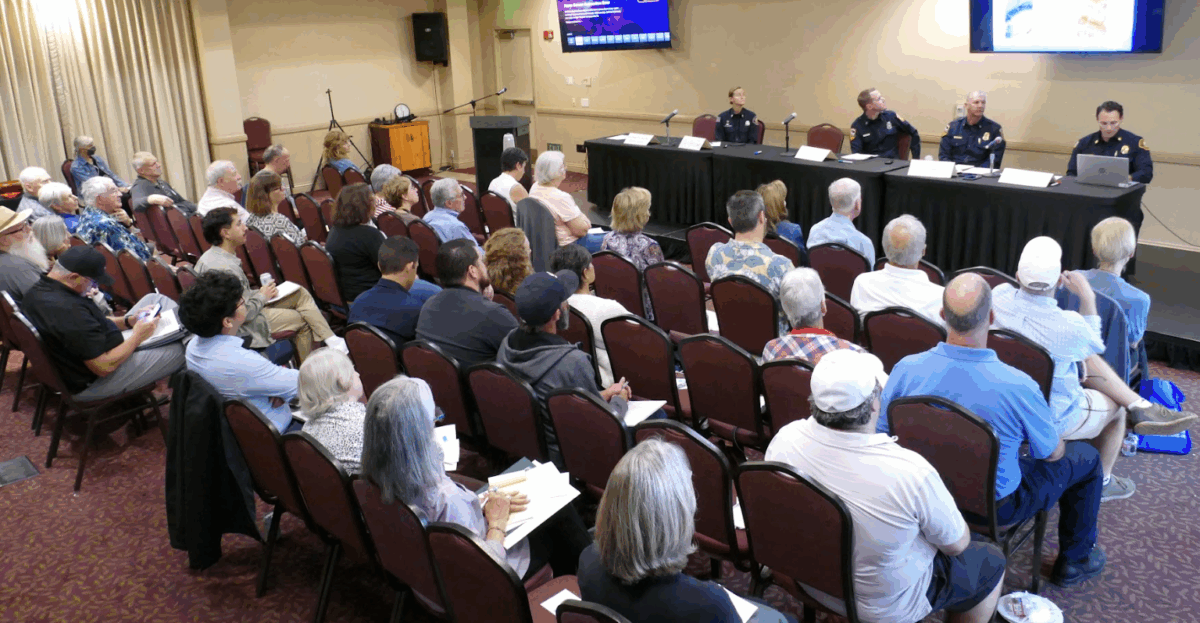
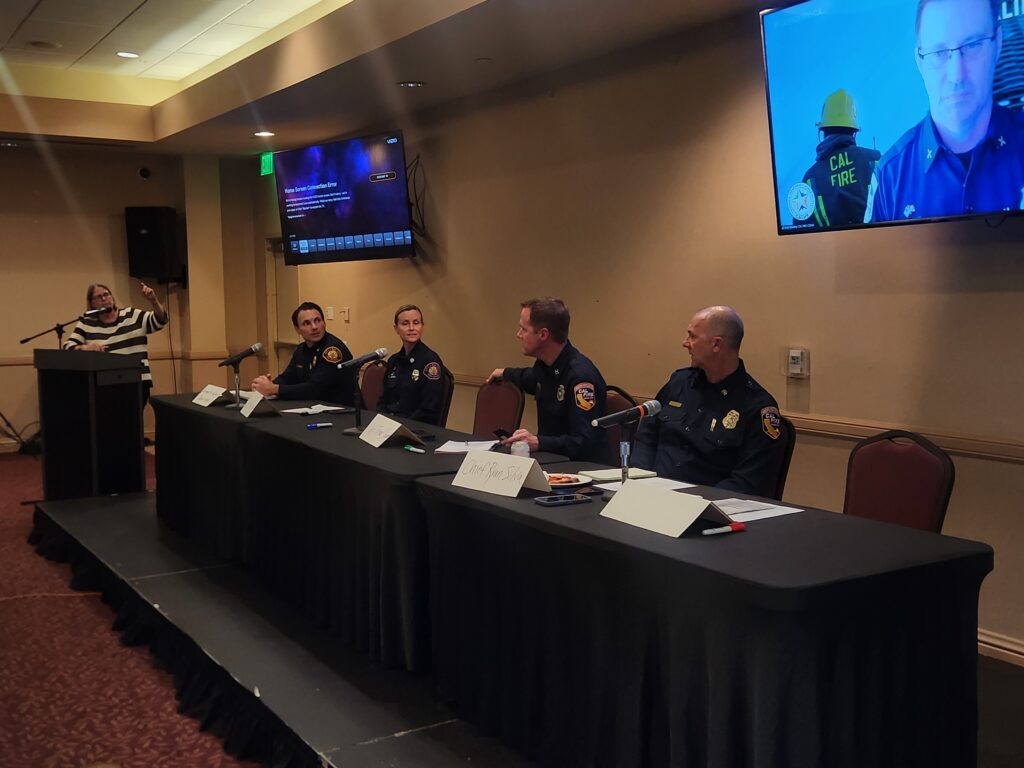
Other speakers from CAL FIRE included Deputy Chief Ryan Silva and Captain Thomas Shoots, and from SDFR, Captain Alma Lowry and Assistant Fire Marshal Alex Kane. Alvarado Estates, Kensington Fire Safe and Rolando Park Fire Safe Councils organized the forum.Thanks to SD Urban Wildfire (sdurbanwildfire.org), pictures, the presentation and a full meeting recording can be found at:  https://www.sdurbanwildfire.org/fire-safe-council-forum/

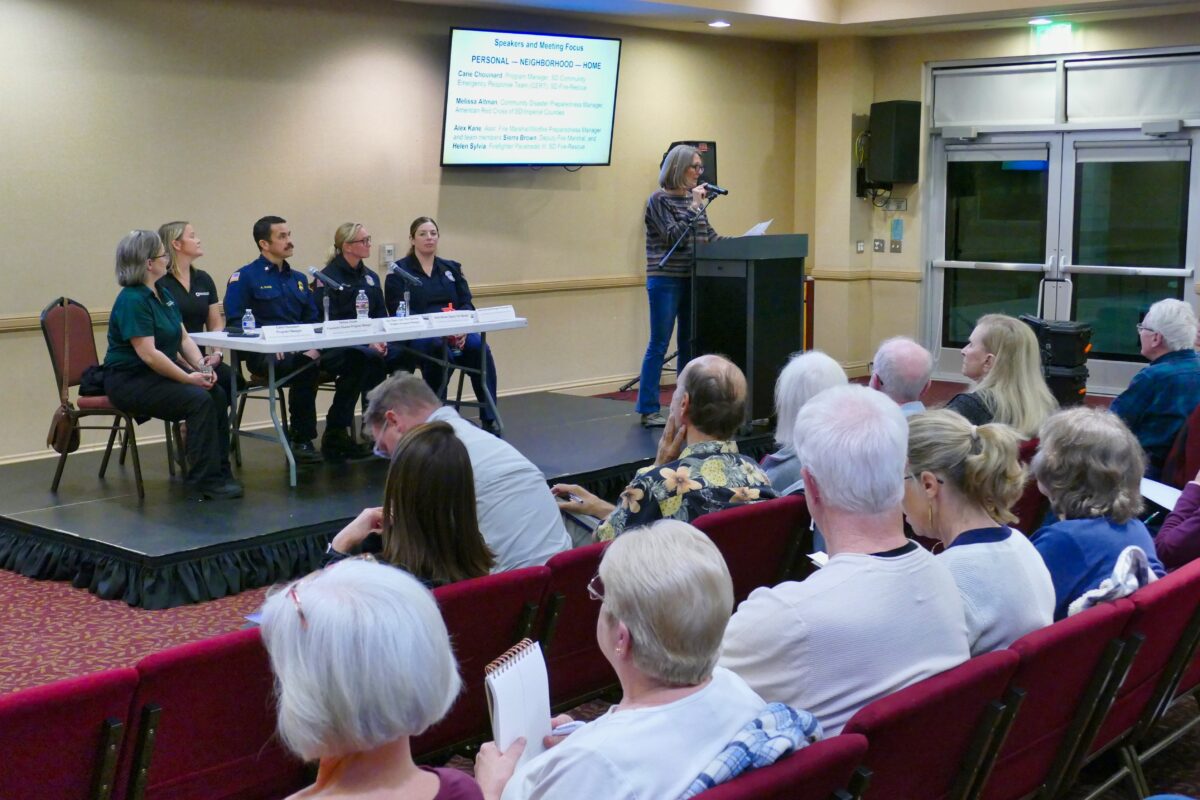
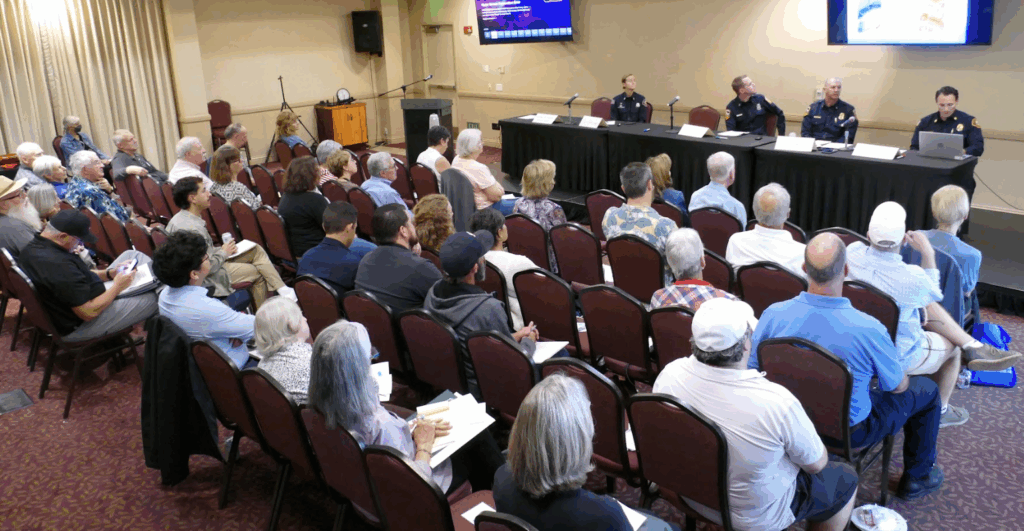
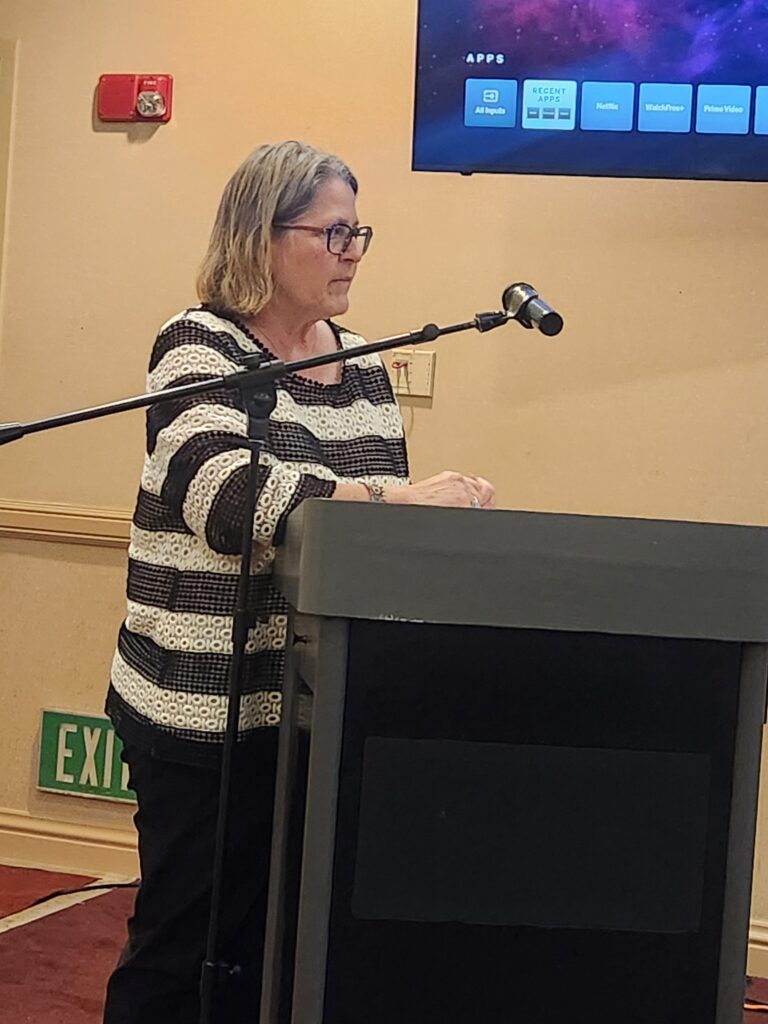
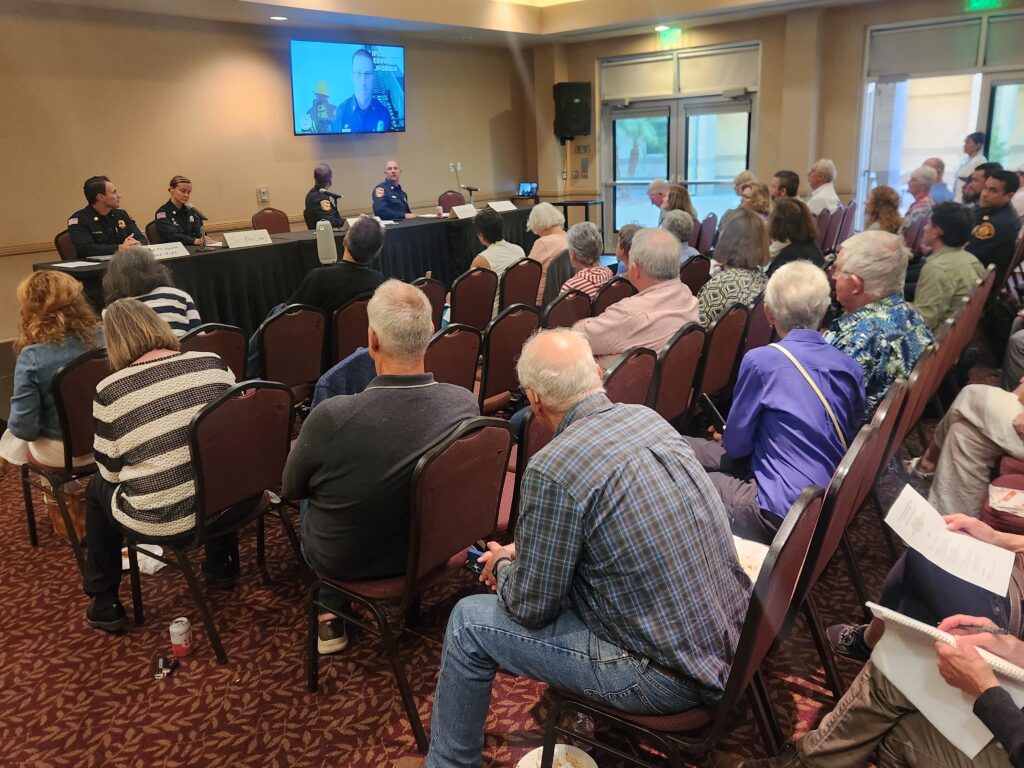
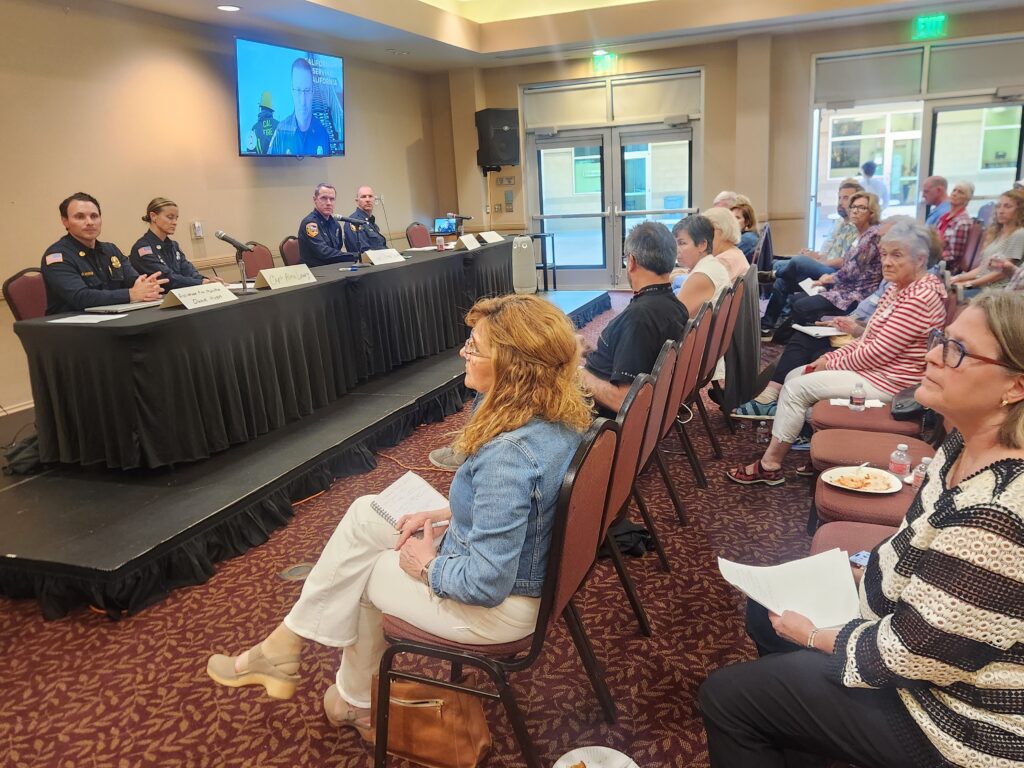
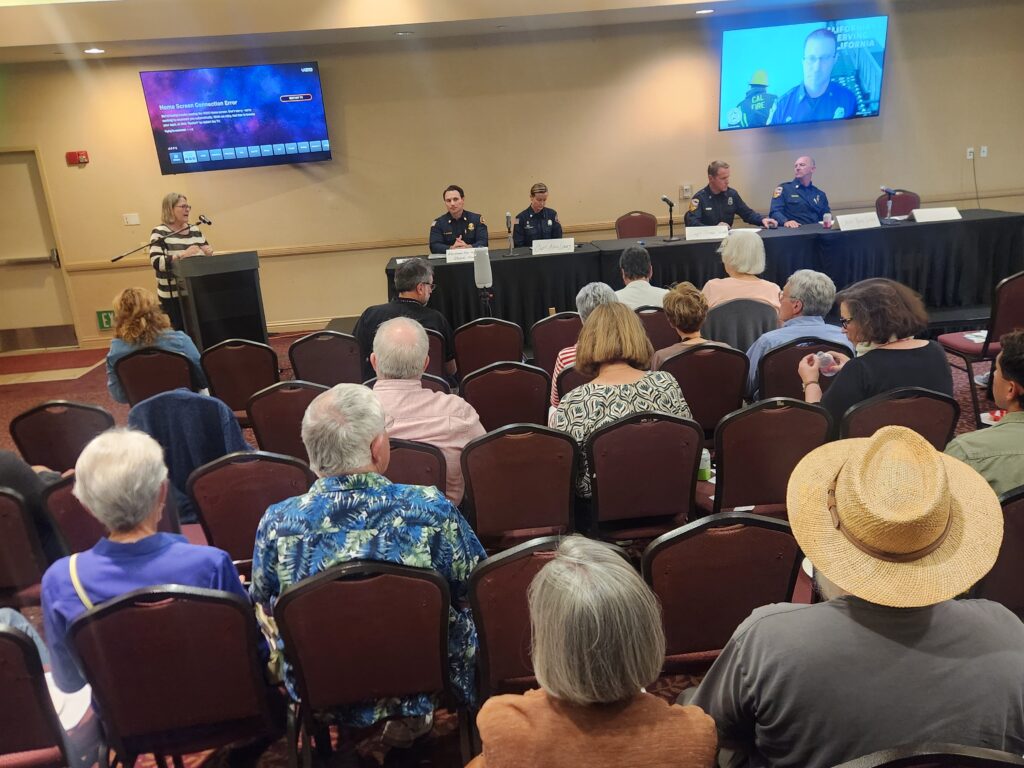
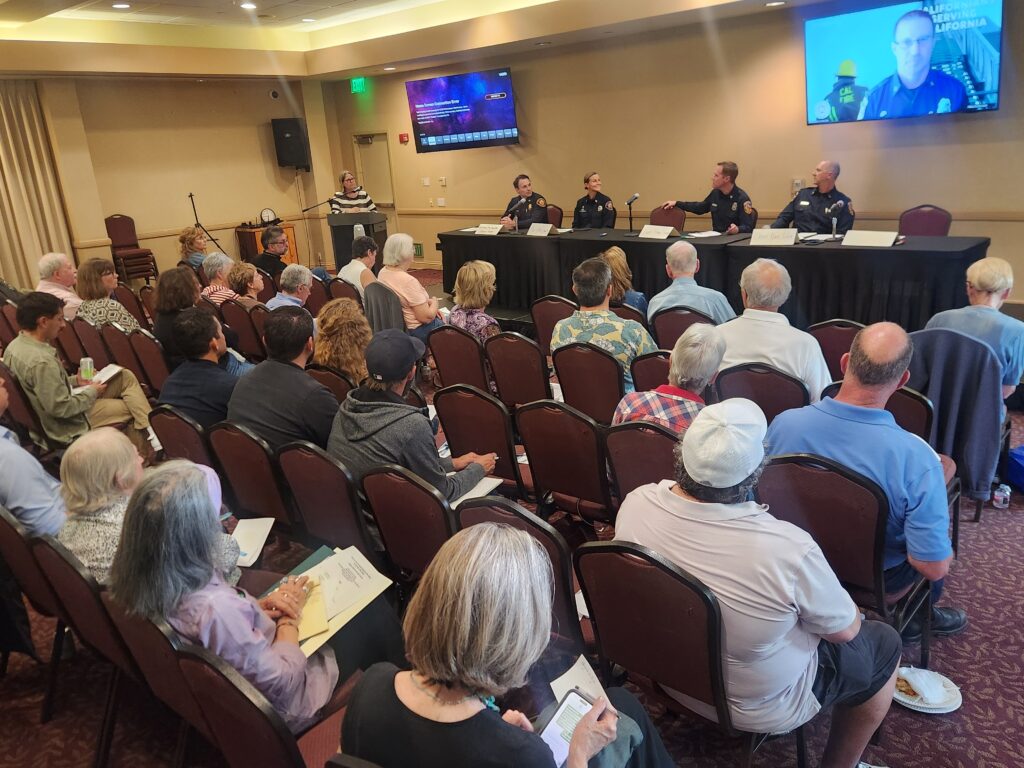
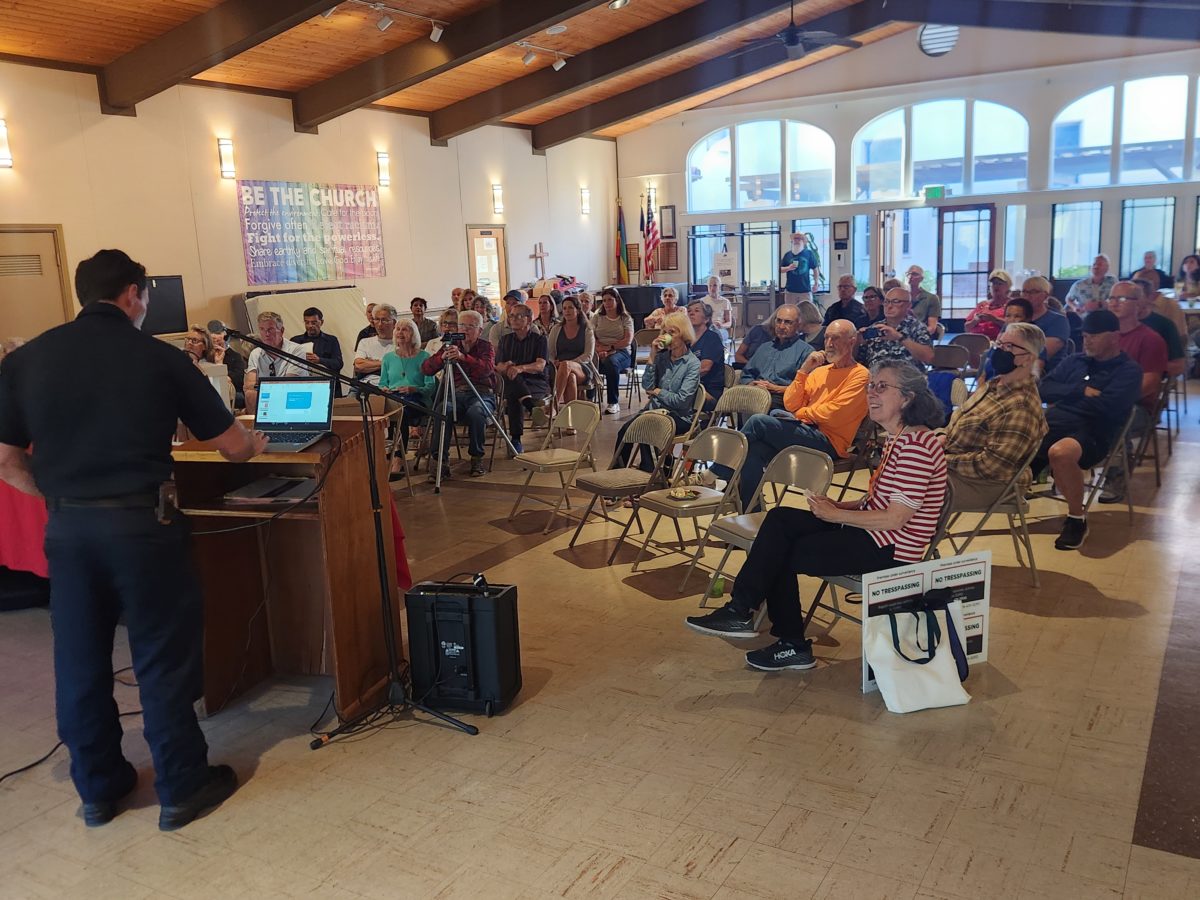
CAL FIRE and San Diego Fire Rescue officials explain the new high fire hazard maps to attendees at a May 21st forum organized by local Fire Safe Councils

Q #2: Why is Kensington Fire Safe Co-Chair Amy Dyson smiling broadly in this picture?

A:  Last month, San Diego Regional Fire Foundation awarded 31 Fire Safe Councils (FSCs), including Kensington Fire Safe, grants totaling $300,000 to aid in wildfire prevention and preparedness, including community education to make their neighborhoods safer.

Kensington Fire Safe was excited to receive one of the grants to help power our 2025-2026 projects including what we hope will be our biggest Dumpathons yet – one this fall and another in the spring of 2026. Last April nearly 20 tons of flammable trimmings from mostly canyon backyards were hauled away from our community during the Dumpathon. We’re all grateful to neighbors who plan their outdoor cleanups around the arrival of the dumpsters. In response to high demand, we are now bringing in larger capacity dumpsters and some fill up within a couple of days!

KFS, along with thirteen new Fire Safe Councils in just the last year, are all working hard with neighbors to make our city safer. We don’t want to be L.A.!  The City of San Diego alone had several new FSCs this year, including Normal Heights, College Canyons, College East, Rolando Park Talmadge. Several others are beginning to organize as well.

Lastly, Dumpathon Shines in Parade

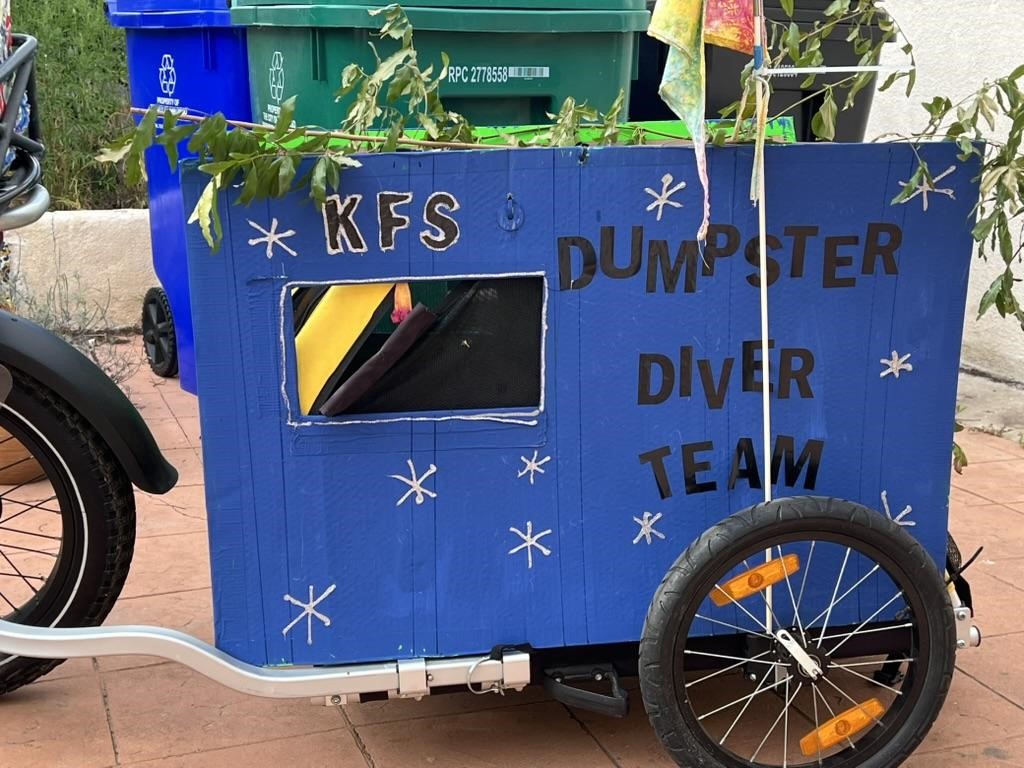
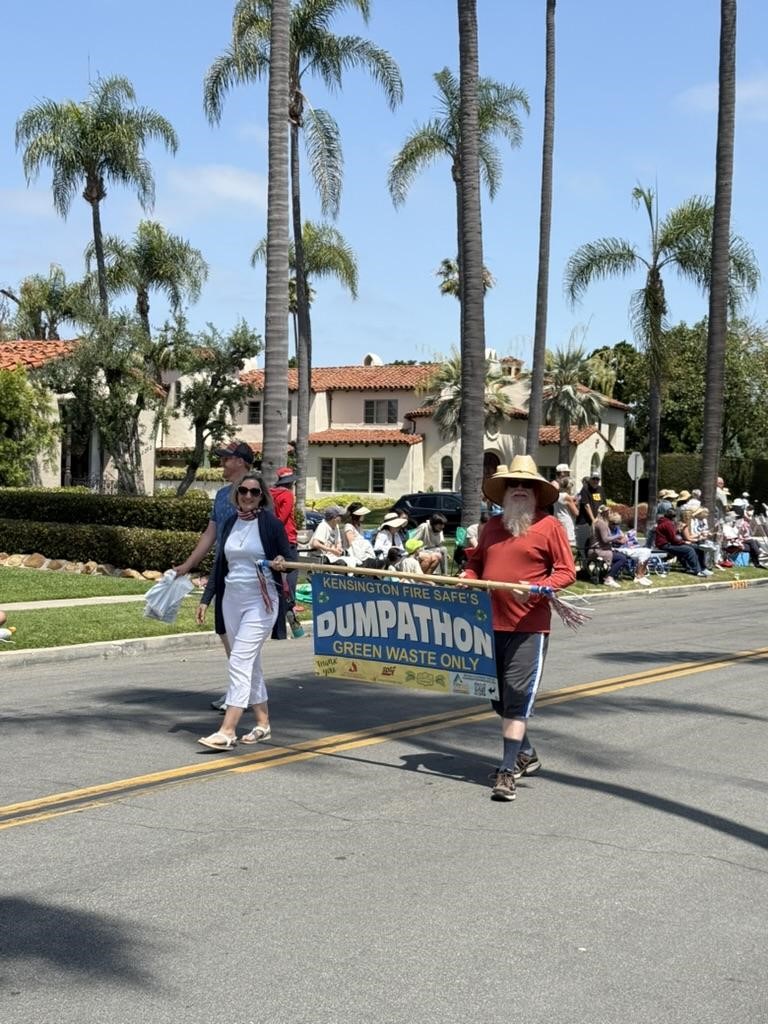
Special thanks to KFS volunteer Pam Rainey for her very original “Dumpster Diver Team” float in this year’s 43rd Kensington Memorial Day Parade.  A great way to celebrate the 20 tons of flammable trimmings hauled out of our community in 17 dumpsters during our recent Spring Dumpathon!

Special thanks to #1 Dumpathon Co-chairs, Mike Baldwin and Peter Peschke for their tireless leadership, #2 Sean Elo Rivera’s office for providing tipping passes, and #3 to the San Diego Regional Fire Foundation, SD River Conservancy, SDG&E and Kensington residents for funding this effort. EDCO Disposal also donates dumpsters for our Dumpathons.

And, much appreciation to all the folks who shouted, “We Love Kensington Fire Safe” during the parade – that was very gratifying to hear!

Frequent Dumpster-minder, Pam Rainey, leads our first ever Memorial Day Float

KFS Co-chair Amy Dyson and husband & loyal volunteer Brian proudly carry our banner in the Kensington Memorial Day Parade.

Categories
Community Presentations Fire Safe News

Reduced San Diego High Fire Zones Questioned at Forum

A recently issued State Fire Hazard map shocked many by eliminating over 30,000 acres from “Very High Fire Zones,” meaning a host of increased fire safety building, land use and other regulations would no longer apply in the eliminated areas.

Concerned local Fire Safe Councils organized a May 21st forum so CAL FIRE and San Diego Fire Rescue officials could address these concerns with the March-issued map. Speakers from CAL FIRE included Chief Brian Barkley, Deputy Chief Ryan Silva and Captain Thomas Shoots, and from SDFR, Assistant Fire Marshal Dan Hypes, Captain Alma Lowry and Assistant Fire Marshal Alex Kane. 

Chief Barkley explained to the over 50 attendees how new California legislation required the State Fire Marshall to define not just “Very High” fire hazard zones but for the first time, also “High” and “Moderate” zones, and for local agencies to adopt requirements for all three zones.

The maps are final as issued for the mostly rural “State Responsibility Areas.” However, urban “Local Responsibility Areas” like San Diego, may add acreage to the maps, but none can be deleted.

Barkley indicated that recent science and technology used to define “hazard” better analyzes the physical conditions predicting fire likelihood and behavior over the next 50 years, regardless of any mitigation efforts. “Risk,” on the other hand, projects potential damage, also considering increased home hardening and other fire mitigation efforts.

“The Government code very explicitly states that we cannot lower the hazard. Once the State Fire Marshal has identified that you are in a moderate, high or very high, we can’t lower the hazard level,” Assistant Fire Marshall Hypes explained. The good news is that AFM Hypes indicated the city is planning to redesignate much of the “High” and “Moderate” zones in the new maps to “Very High”  and they are also adding some canyon areas and a 300-foot buffer zones for the potential ember cast. The proposed revised map should be on the state website within the next month.

The City of San Diego has until July to finalize amendments to the base map issued by the Office of the State Fire Marshall. According to AFM Hypes, 20,000 acres will likely be added to the city’s designated very high fire zones.  While this is less than the 30,000 acres that were removed, much of that acreage should not have been included in the first place—such as federal lands and Fiesta Island, which is uninhabited and surrounded by water.

Thanks to SD Urban Wildfire (sdurbanwildfire.org), pictures, the presentation and a full meeting recording can be found at:  https://www.sdurbanwildfire.org/fire-safe-council-forum/

Alvarado Estates, Rolando Park and Kensington Fire Safe Councils organized the forum. Other FSCs represented at the meeting included College Canyons, College East, Talmadge, Scripps Ranch and University Heights, as well as Canyonlands, Neighbors for a Better San Diego and a representative form Senator Weber Pierson’s office. Anyone wishing to contact their local fire safe council or for information on starting an FSC should contact info@rcdsandiego.org.

Categories
Fire Safe News MetroView Fire-ey Questions

Where Do You Go for Wildfire Info?

By Judy Beust Harrington, Co-Chair, Kensington Fire Safe Kensington’s Fire Safe Council will share researched answers to your inquiries here. Send fire-related questions to info@kensingtonfiresafe.org.. Pictures appreciated!

Last month’s Montezuma Fire spurred over 85 questions from residents, both during the blaze, and later from the 260 folks at the SD Fire-Rescue “What Happened and What’s Next” follow-up presentation, November 21st at Hoover High School. 

This is the first installment of answers to questions we were unable to get to during the event.  We’ll be publishing them here as well as on Nextdoor and our website.

If you missed this detailed presentation check it out at kensingtonfiresafe.org.  You’ll learn exactly how flames entered and destroyed one home, instead of the dozen or more that firefighters initially thought would be lost in the blaze.  

Q:  What are the best sources for wildfire updates? 

A:  San Diego’s Office of Emergency Services website recommends downloading Genasys Protect for real time danger and evacuation notifications provided by authorized public officials. It divides a county into smaller zones, each with a unique identifier to help officials communicate about affected areas much more quickly than in the past. More information at protect.genasys.com.

Most people we talked to during the fire were using the WatchDuty mobile app, although it didn’t seem to have very frequent updates.  According to a Washington Post article last June, it’s a successful but low-budget service mostly run by volunteers, including retired firefighters, who pull info from law enforcement sites, news briefings, video feeds of fires, radio communications and other sources.

We should all register our cellphone # and email address with AlertSanDiego.  Emergency responders use it to send evacuation and incident information.  Their disaster feed also provides some basic data on current and past fires.

San Diego Fire-Rescue Department’s “X” feed also lists fires and provides background info. https://x.com/SDFD/status/1852497271625269360

You can sign up for SDG&E power shut off alerts at: https://www.sdge.com/notifications.  Even if you are not the bill payor, you can register on the app so you also get the alerts. Be sure to keep your contact info updated.

ALERTCalifornia (https://alertcalifornia.org/) utilizes AI for detecting smoke and other early fire indications via over 1,000 cameras placed in various forests. In the first two months of use, it correctly identified 77 fires before any 911 calls came in.However, it didn’t detect the Montezuma fire – likely because the closest camera appears to be at Cowles Mountain.

A wildfire-focused UC-Berkley engineering professor, who mostly uses Watch Duty for fire info, warned that apps can’t take the place of official communications from government agencies: “No information source is completely reliable. Mobile phone and internet service can fail during fires and cut people off from communications.(1)

So maybe keep those radios and TVs on too, plus have a portable charger ready for your cell phone, in case power is shut off.

Q: What does it really mean when a wildfire is “contained”? 

A: During the recent fire, many were confused by the low “% contained” reports even after the highly visible flames were gone and smoke was a mere fraction of what was previously witnessed.

Deputy Fire Chief/Fire Marshal Anthony Tosca explained to us that flame and smoke do not determine the degree of “containment” in a vegetation fire. Instead, the term refers to the extent to which fire crews have managed to create a barrier around the fire’s perimeter to stop it from spreading. This barrier or “fire line”, is created by removing vegetation and other flammable materials or using natural or constructed breaks in the landscape to act as a boundary. 

For example, when a fire is “50% contained” it means that half of the fire’s perimeter is surrounded by these controlled barriers. Full containment, at 100%, means the entire perimeter of the fire is encircled by a fire line, greatly reducing the risk of further spread.

Q: If you have time, should you hose down your yard and home before leaving? 

A: Again, Chief Tosca clarified for us: “Hosing down your yard and home before evacuating may seem like a good idea, but it’s not recommended for a few reasons:

1.   Water Won’t Last:  The water you spray on your home will quickly evaporate, especially in the heat and wind of a wildfire. Once it dries, it won’t provide any lasting protection, and your home would be just as vulnerable as if it hadn’t been watered at all.

2.   Every minute counts: Hosing down your yard and home can take valuable time and increase the risk of you being caught by the fire. Better to leave promptly and let firefighting teams manage structure protection.

3.   Water Pressure for Firefighting: In a wildfire situation, firefighting crews rely on a consistent water supply to combat the fire. Excessive water use by homeowners can reduce water pressure, which may impact firefighters’ ability to protect your neighborhood.”

Extra!  Extra!

Help save firefighters lives – when you see the flashing lights of a red fire truck that’s positioned diagonally across a highway lane, it’s to block traffic away from the ambulance and mangled car in front. At 65+ mph, cars zipping in front of that truck put firefighters and emergency personnel’s lives at risk! Please do not rush back into the lane as soon as you pass the fire truck.  Stay away until you are well past the accident!

(1) https://www.washingtonpost.com/technology/2024/06/21/wildfire-tracker-map-app/
Categories
Fire Safe News MetroView Fire-ey Questions

Been Hit Yet With Odd New Insurance Queries?

By Judy Beust Harrington, Co-Chair, Kensington Fire Safe (KFS)

Kensington’s Fire Safe Council will share researched answers to your inquiries here. Send fire-related questions to info@kensingtonfiresafe.org.  Pictures appreciated!

Q:  Are We a “Fire Risk Reduction Community”?

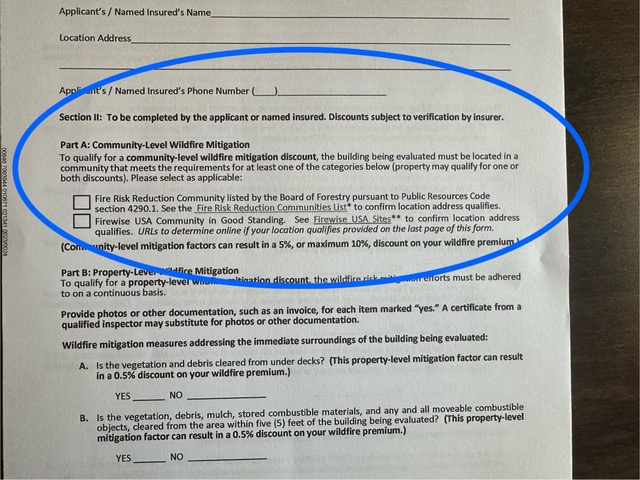
A:  A neighbor recently contacted us about this question on a homeowner insurance application: Is Kensington either a “Fire Risk Reduction Community” or a “Firewise Community?”

Sorry, nope – we’re not either one, but wish we were. 

Attaining a Firewise designation is a very challenging, long-term process requiring a lot of volunteer residential involvement. It’s likely more achievable for condo associations.  According to the Firewise website, some insurance companies do offer discounts to residents residing in Firewise USA sites. (https://www.nfpa.org/)

On the other hand, a “Fire Risk Reduction Community” designation or “FRRC” seems more do-able. It requires local community assessment of fire vulnerabilities and a comprehensive plan to reduce risks.  While San Diego County is on the list of FRRCs, the City of San Diego is not. We reached out to Fire Marshall Anthony Tosca about it, and he said the city plans to apply for this designation next time the opportunity becomes available. Perhaps this designation might mean a possible rate discount in the future for homeowners.

Meanwhile, if you want to see how your insurance costs compare to others, you could check out Bankrate’s website, although our insurance advisor, Scott Caraveo said they only list insurers who pay to be listed, and some aren’t doing business in California.  If you submit your contact info, you’re likely to be bombarded with phone calls and emails from brokers. https://www.bankrate.com/insurance/homeowners-insurance/homeowners-insurance-cost/

BTW, there’s also something called a Comprehensive Loss Underwriting Exchange” (CLUE) report on a homeowners insurance claims history.  Homeowners can request a copy under the federal Fair Credit Reporting Act, toll-free at 1-866-312-8076 or by visiting consumer.risk.lexisnexis.com.  Scott says insurance companies use reports like CLUE all the time, but CLUE reports don’t always include your specific claims history – it could include claims made at the property before you owned it or claims you made at a prior residence. In any case, insurance carriers already know about these events and are taking them into consideration each year.

Is My Home’s Fire Score Online?

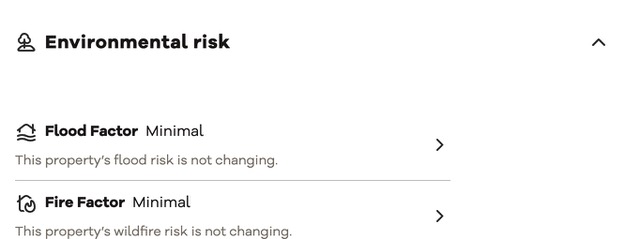
Thank you, Sandra Johnson, for pointing out to us that some real estate sites are now including a fire risk score. I checked Realtor.com for a house for sale on Sussex, and here’s what it showed:

Realtor.com fire risk information for a Sussex Drive home for sale.

Glad to see it says “minimal” although, that seems odd since much of Kensington is designated a Very High Fire Risk Hazard Area. Both Scott and I wonder about the accuracy of these ratings. Realtor.com has a pretty good Q&A on their scoring: https://www.realtor.com/wildfire-risk/.

Other sites also providing fire ratings include:  

  • Wildfirerisk.org: Shows risks on a color-coded map when you search by town, county, or state. 
  • Riskfactor.com: Shows a fire score for any property in the continental USA. The fire factor scale ranges from 1 to 10, with 1 indicating no modeled exposure to wildfire and 10 indicating a greater than 36% chance of burning over 30 years. 
  • FirstStreet.org: Bases wildfire risk on a region’s vegetation, topography, and fire-related weather. 
  • ClimateCheck: Provides a free climate risk assessment for any address in the U.S. 
  • CoreLogic: Provides a wildfire risk score that evaluates available fuel, as well as the topography of the land.

While these may be good tools for selling a house, they’re unlikely to sway insurance companies on your property’s safety. More accurate may be the Fire Hazard Severity Zone (FHSZ) maps, although I find them a bit hard to work with since they don’t name major roads and highways.  They can be found at: https://osfm.fire.ca.gov/

We wish all those struggling to keep, find or afford their insurance luck – we’ve had our own challenges too!

Fire-safe Materials?

Last note – a reader of our Sept-Oct column on Zone Zero asked if there are any non-flammable cushions one could have on porch wrought iron furniture and still meet the future five-foot-from-the house zero flammability requirement.  Any thoughts on that, folks?

Categories
Fire Safe News MetroView Fire-ey Questions

Ready for Zone Zero Around your Home?

By Judy Beust Harrington, Co-Chair, Kensington Fire Safe (KFS)

Kensington’s Fire Safe Council will share researched answers to your inquiries here. Send fire-related questions to info@kensingtonfiresafe.org.  Pictures appreciated! 

Q:  Is AB 3074’s new radical Zone Zero requirement in effect?

A:  Assembly Bill 3074, passed in 2020, may be a BIG change for homeowners. 

Passed in 2020, this legislation requires a five foot “zone zero” around homes in areas with high fire risk. That zone is not to contain ANY flammable materials. This means no artificial turf, trellis, pergolas, shade covering, wood planters, attached combustible fences or gates, mulch, etc.…basically anything that can catch fire. But, don’t panic; the rules aren’t out – yet. 

The good news is, this requirement can certainly help keep our homes safer from spreading flames and flying embers, which have been seen in some recent canyon fires. We’ve been told that airborne, blazing Mexican fan palm fronds can travel the length of a football field!

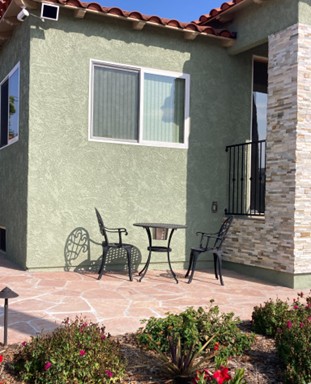
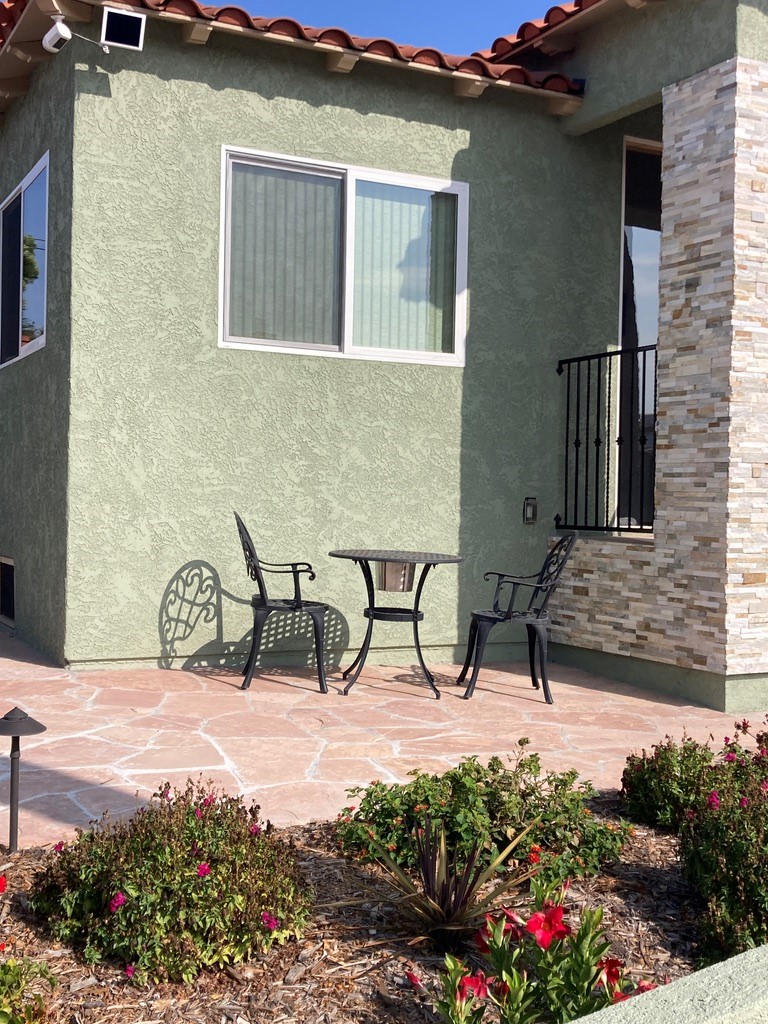
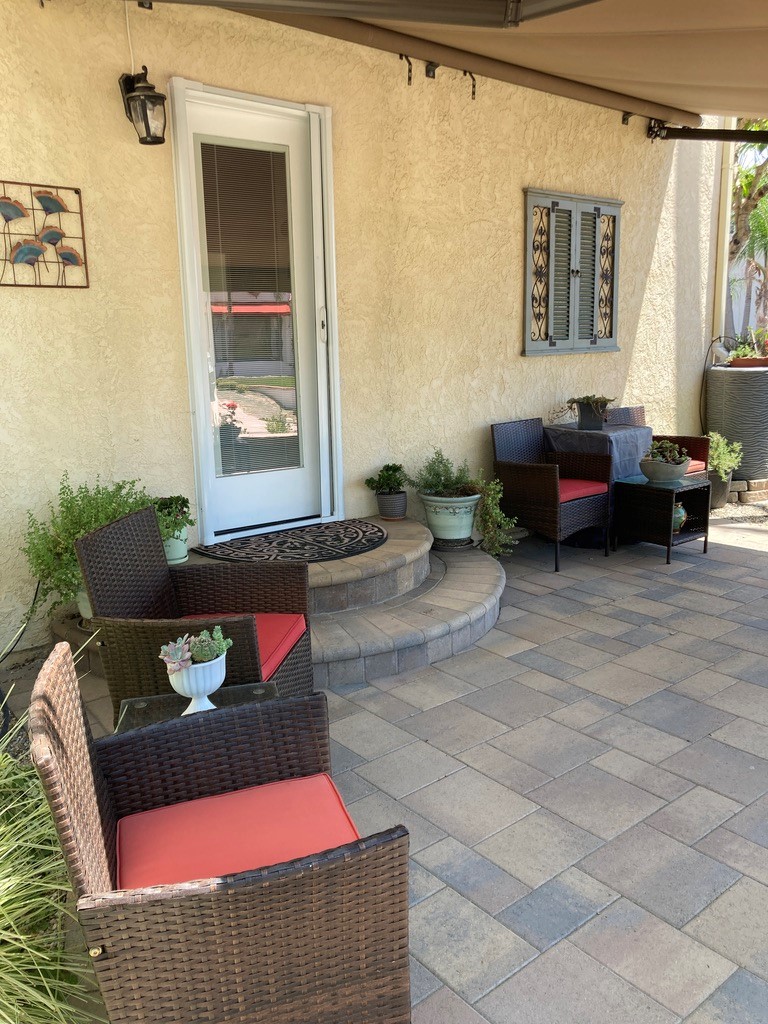
The bad news is most of us like seeing shrubbery, flower boxes or other decorative plants right outside our windows. Seems like very few area residences are currently free from flammables that close to their house. But maybe we need to be open-minded. There actually are some attractive yards with almost a five-foot zero non-flammable area, as pictured.

Small patios like these next to the house might meet future “zone zero” requirements, although  in the event of a fire, you’d have to be home and have time to move any flammable items.

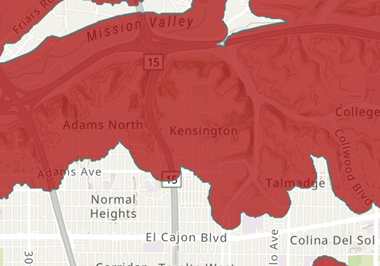
The question is, if it only applies to structures located in a “High” and “Very High” Fire Hazard Severity Zone (VHFHSZ), does that include my residence? Chances are, yes, because much of San Diego and particularly Kensington is in high or “VHFHSZs”. You can check your location at:  https://www.sandiego.gov/fire/services/brush/severityzones

When will this apply to me?

Before enforcement of the new zero zone can occur, the State Fire Marshal must approve the implementation. That’s projected to happen for new construction in 2025, and for existing structures one year later.

Zone Zero was one of several key topics covered at last month’s KFS presentation at Kensington Community Church, by Assistant Fire Marshall Daniel Hypes and Deputy Chief Marshal Anthony Tosca, from the SD Fire Department, as well as Parks and Recreation Deputy Director Erika Ferreira and Open Spaces Division Project Officer II, Laura Ball.

Marshall Hypes provided details about door-to-door defensible space inspection of canyon rim homes, management of vacant lots and, with Parks and Rec, brush management program of city properties.

Officer Ball covered Open Spaces Division efforts, including handling brush complaints, and more recently, the real estate defensible space inspections required to sell a home. They are now training more assessors so they can expand this service. They also have a  “Subdivision Review Program” to identify at-risk areas with at least 30 dwelling units in VHFHSZs with only one way in and out. Our community relations officer, Joshua Cummings, drove through the Alder Loop area after we mentioned our limited access.  You can learn a lot more by listening to the presentation at: https://shorturl.at/3VF7k 

Is My Home Ready for Fires?

Finally, remember there’s free home hardening assessments available. You have to register far in advance, but our neighbors Bill and Nancy Bamberger just had their house inspected after signing up on the County Fire Safe website–http://www.firesafesdcounty.org/hap, and were very pleased with the result.

Bill said, “The inspector spent an hour at our house, giving us specific advice on how to make our house more fire resistant. She recommended replacing our wooden gate with a metal one and told us where we could find a gate that would work. She acknowledged that some of her recommendations were costly but told us about cheaper alternatives. All-in-all, we got very useful advice!”

Tying all this back to the new Zone Zero – don’t be surprised if your insurance company tells you to make some changes. A good example is the beautiful but highly flammable and invasive — and now gone – white melaleuca trees on Marlborough and Ridgeway.  We’re hearing more cases where homeowners had to do some hardening to secure insurance.

We wish all those struggling to keep, find or afford their insurance luck – we’ve had our own challenges too!

Fall Dumpathon is Coming!!

Kensington Fire Safe is excited to announce our Fall Dumpathon, Thursday, 9/26 to Monday, 10/7.  During this time, dumpsters will be located throughout the Kensington neighborhood, allowing residents to dispose of extra greenery trimmed from their properties. This initiative helps make our community safer from wildfires!

This project is made possible by the San Diego Fire Foundation, support from Council President Elo-Rivera’s office, EDCO Disposal Company, and our dedicated neighborhood volunteers.

###

  1. https://www.cityofventura.ca.gov/FAQ.aspx?QID=713
  2. https://www.philomathfire.com/insurance-services-office-iso-information#:~:text=ISO%20is%20the%20principle%20provider,industry%20in%20the%20United%20States
Categories
Fire Safe News MetroView Fire-ey Questions

How Does Our Fire Department Compare to Others?

By Judy Beust Harrington, Co-Chair, Kensington Fire Safe (KFS)

Kensington’s fire safe council will share researched answers to inquiries from community members here – if you send your fire-related questions to info@kensingtonfiresafe.org.  Pictures appreciated!

Q.  Is there a measurement showing how San Diego’s fire department stacks up to other fire departments?

A: This time the answer came before the question. Recently Kensington Fire Safe Council member, John Pringle, chatted with me while walking his dog.  John happened to mention that our San Diego Fire Department has an “ISO” rating. 

Here’s what we learned: the “Insurance Services Office,” is a subsidiary of Verisk Analytics, which provides statistical data for insurance companies. They assign an ISO “Public Protection Class (PPC)” from 1 to 10, based on an evaluation of a community’s ability to protect the public from fires.” (1) (2)

That evaluation involves an assigned value to the following  categories and weights:(3)

  • 50%: issues like staffing levels, training, firehouse proximity.
  • 40%: availability of water and fire hydrants.
  • 10%: emergency communication systems.

Extra points may be earned based on community outreach, like fire prevention and safety courses.  On the other hand, having areas that exceed five driving miles from the nearest fire station also affects scoring.

How do we rate?  Drum roll please… As of the last rating assessment in 2017, San Diego’s was a “2″ — with “1″ being the best. This is very impressive considering only 45 out of 854 California fire departments nationwide achieved a “1” – per the chart and article below.  Apparently ISO evaluations are typically done every 10 years, so we’re probably not yet due for another one. (4) (5)

Of course, the next obvious question is – does that rating help when it comes to our homeowner insurance costs and availability?

Does the rate matter?

Based on discussions with John and KFS insurance advisor, Scott Caraveo, the ISO rating may or may not be used by insurance companies in their complex process for determining community rates.

“Insurers don’t really provide discounts for lower PPC scores…safer areas just cost less.” Scott clarified.  “Most California carriers work off a combination of both FireLine, parcel-based modeling and PPC, which is community-based risk modeling. Overall, community-based modeling is safer for companies because they can apply a broader rate to a general area, as opposed to setting different rates for each individual household in that same area.

“Consumers might appreciate parcel modeling quite a bit, but that would also be a LOT more tedious for companies (and agents/brokers!), and consumers would likely see a lot more variance on their insurance rates from house-to-house as a result.”

The FireLine data Scott mentioned is also provided by the risk assessment company, Verisk, in collaboration with the National Fire Protection Association.  Its FireLine analysis includes property-specific mitigation efforts like defensible space and other home hardening measures, as well as fuel, slope, wind patterns and other factors.  

For a past column, KFS asked Verisk about the extent to which density is considered, and a spokesperson confirmed that it is a factor although how much it influences their fire risk scoring is unclear.  We are talking to Verisk about a possible presentation to our community —  tell us if that’s something you might be interested it. (info@kensingtonfiresafe.org). 

Meanwhile, there’s comfort in knowing our fire department is among the few in the top two ISO performance classifications. One website I visited for another California area with a high ISO recommended homeowners remind their insurance company of that good rating. 

Seems like it couldn’t hurt — unlike the rate increases or cancellations unfortunately neighbors are seeing these days.

###

(1) https://www.philomathfire.com/insurance-services-office-iso-information#:~:text=ISO%20is%20the%20principle%20provider,industry%20in%20the%20United%20States

(2) https://einhorninsurance.com/insurance-advice/fire/high-brush-home-insurance-public-protection-class/#:~:text=What%20does%20Protection%20Class%20or,the%20worst)%20to%20a%20home.

(3) https://mcesd8.org/class1iso/#:~:text=More%20than%2050%2C000%20fire%20departments,earned%20a%20Class%201%20rating.

(4) https://www.newportbeachca.gov/government/departments/fire/iso-class-i-rating

(5) https://www.princeton-il.com/departments/fire___ems/iso_public_protection_class_rating.php#:~:text=The%20Public%20Protection%20Classification%20(PPC,to%20the%20related%20evaluation%20criteria

Categories
Community Presentations

Community Presentation – How will the City Manage our Canyon Brush?

You can watch the full presentation here and view the overheads here.

Guest presenters and other staff included Assistant Fire Marshall Daniel Hypes, Deputy Chief Fire Marshall Anthony Tosca, Parks and Rec Deputy Director Erika Ferreira and Project Officer II for the Open Space Division Laura Ball, Code Compliance staff Raquel Elias and Steven Macias and our Community Liaison Police Officer Joshua Cumming.

Key topics included:

  • Efforts to identify very high fire hazard areas without a secondary egress route and follow-up actions
  • Updated recommendations on home hardening against flying embers
  • New defensible space zone recommendations
  • Open Space surveys and brush thinning strategies
  • Right of Entry permit process

In addition to numerous questions, many stayed afterwards to talk to our presenters about their specific concerns. Follow-up action on nearby encampments took place over the next few days, thanks to Officer Cummings and some great Talmadge neighbors.


Much appreciation goes to all who helped:

  • Flyer design/ copying/distributing by Amy Dyson, Ryan Hunter, Zoraida Payne, and Vicki Pinkus.
  • Room setup, etc: Amy, Brian and Zion Dyson, Ryan Hunter and JB Finnell, Bill Harrington, Karen Austin and Eric Sands from Alvarado Estate FSC, and many attendees too.
  • Some very valuable help from Kensington-Talmadge Library, Pappaleco’s and videographer Charlie Stebbins.
  • Co- sponsor support from:
    • Alvarado Estates Fire Safe Council
    • Kensingtion-Talmadge Community Association

Kensington Fire Safe appreciates all this support and the neighbors who attended so they could learn how to make us all safer from wildfire.

Categories
Fire Safe News MetroView Fire-ey Questions

Are Green-and-Fire-Fuel-Lean Efforts Coming Our Way?

By Judy Beust Harrington, Co-Chair, Kensington Fire Safe (KFS)

Kensington’s fire safe council will share researched answers to inquiries from community members here – if you send your fire-related questions to info@kensingtonfiresafe.org.  Pictures appreciated! 

Here’s a follow-up to previous Firey Questions:

Q #1.  When is the city going to trim our canyons?

Come pose that question to Deputy Chief Marshal Anthon Tosca, Senior Code Compliance Supervisor Marci Garcia plus other representatives from the Parks and Recreation Open Space Division, and also from the Fire Rescue Department, when they join us for a presentation at Kensington Community Church, Wednesday, June 12th at 6:30 PM, in Lander Hall. 

Learn about vegetation thinning on certain city property adjacent to privately-owned lots, the “Ember Resistant Zone,” real estate defensible space inspections and other local wildfire prevention efforts.  Please let us know if you’re coming so we can be sure to have enough chairs.  RSVP at kensingtonfiresafe.org.

Q #2.  Can I find out how fire safe my house really is?

A: Yes!  Check out the FREE home assessment program being offered by the Fire Safe Council of San Diego County.   The assessments include inspecting your house and property to determine vulnerabilities to potential flying embers in the event of a wildfire, as well as other fire dangers.  Staff conducting the 30-to-45-minute, confidential assessment will make recommendations for improvements to harden your home against potential fires and provide other resources.

Two program phases are being rolled out by geographic zones.   The first phase is the home assessments.  For Kensington/Zone 6 the second round will take place August 5th to the 7th.  They already completed about half a dozen in our area during the first March round.

There’s a second “service” phase when chipping and defensible space efforts are available to homeowners in high-risk areas that have physical, economic, or other barriers to doing the work themselves.    These services will be available August 12th to 16th  for our area.  For more details, go to https://firesafesdcounty.org/hap/

This program is made possible by funding from CAL FIRE, through the California Fire Safe Council’s Defensible Space Assistance Grant Program.

Q#3: When is the next KFS Dumpathon?

A:  Well, not this Spring as originally planned. We’ve been told that we should not hold this fuel-thinning support during the March through August gnatcatcher breeding season. We started holding late Spring events several years ago, based on resident’s feedback on the best time for trimming excess brush, after learning of a County and State agreement to allow fire fuel reduction efforts during this season.  However, we were recently informed that the City’s Municipal Code restricting this activity overrides this agreement.  So, our Spring Dumpathon was canceled.

Categories
Fire Safe News MetroView Fire-ey Questions

Is the California “FAIR Plan” Fair?

By Judy Beust Harrington, Co-Chair, Kensington Fire Safe (KFS)

Kensington’s fire safe council will share researched answers to inquiries from community members in this column.  Send your fire-related questions to info@kensingtonfiresafe.org.  Pictures appreciated! 

Q:  Over a recent delicious lunch at Clem’s Station on Monroe,  we talked with Tony – manager, bartender, waiter, and part of the owing family – about problems residents are having getting, keeping, or affording homeowner insurance. He asked how the California FAIR Plan worked.

A:  Good timing, Tony.  We recently sat in on a conference call that gave us some insights into the  “Fair Access to Insurance Requirements” program, aka the California FAIR Plan (CFP).

First of all, it’s not a government entity, as a lot of folks think.  Although established by a California statue in 1968, CFP is run by a consortium of California property and casualty insurers. They’re required to participate if they want to do business here, and they share in the plan’s overhead, profits and most significantly – losses, in direct proportion to their market share in our state. (1)  

So that means the bigger their sales, the greater their CFP plan liabilities, on top of whatever they’re paying out for their own insured. Is it any wonder you may find it hard to get a policy with the biggest insurers like State Farm, The Hartford and USAA?

FAIR plans, which exist in 26 states, weren’t intended for long term coverage, but rather as a temporary safety net until traditional insurance could be secured. In other words, it’s the insurance of last resort when no other insurer will take you on. But with our fire losses, CFP covers over 320,000 policies – about 3% of Californians.  (By contrast, Washington State’s CFP Plan only covers about 130 policies.) (2)

CFP doesn’t take all comers. Brokers must answer questions about why they’re placing the risk with it, and confirm they’ve been declined by other carriers. As a result, CFP’s growing share of high-risk properties results in more expense for insurers and higher premiums for the insured..(3)

But…there are other problems.  According to a June article in the San Francisco Standard, critics say the CFP is underfunded and mismanaged.  Perhaps not surprising since, as the article says, “The very companies that refuse to insure properties in high-risk areas are still insuring them through the “back door” of CFP, and it doesn’t always pay out when it ought to.’

The article goes on to cite a Department of Insurance four-year study that found numerous issues, including that the CFP on occasion failed to provide standard fire insurance coverage, particularly regarding smoke damage claims. .(4)

Kensington Fire Safe’s insurance advisor, Scott Caraveo, says the process can be slow. “As homeowners buy in areas with higher fire risk, they’re ending up with five or more insurance quotes from several brokers, which may all be from the CFP. So now CFP has five different applications from five different brokers, all for the same address, creating a gigantic backlog.  The three or four days it used to take for a CFP quote to be returned have become three weeks or more.”

Scott Caraveo, Insurance Advisor to Kensington Fire Safe

Higher Prices & Less Coverage

Scott pointed out there was a 15 percent increase this past December, but it’s not spread evenly. According to a November ABC report, “Some people in the most wildfire-prone, high-risk areas could see their rates as much as double.”  And CFP covers less than traditional insurance plans.(5)   Of course, some of our neighbors have already seen their homeowner insurance double if it’s renewed at all.

So, that’s the bad CFP news.  The good news is we at least have a backup   insurance option.  If interested, your insurance broker can help with the plan’s application process, which requires information on your home’s replacement costs and date-stamped photos.  You’re supposed to get a quote that’s good for 30 days.

Another option is an excess and surplus (E&S) carrier specializing in insuring high-risk properties.  These policies are not backed by the California Insurance Guarantee Association, although they likely have other fail safes, such as reinsurance. Check with your broker or the Surplus Line Association of California website for more information.

Meanwhile, make your home more attractive to insurers by hardening it against fire embers. A good time to trim excess green fuel and dump it for free is during the KFS Spring Dumpathon,  Thursday, April 25 to Monday, May 6th.  Check for location announcements at kensingtonfiresafe.org and on Nextdoor. And please, no non-greens. We can be fined for that!

Watch for announcements about our April 25th to May, 6th Dumpathon!

By the Fire Safe Way… we’re hoping to arrange two presentations this Spring: 

  • Efforts to Keep Our Canyons Safe by representatives from San Diego Open Space Brush Management and the San Diego Fire Department.
  • Assessing Fire Risk by representatives from Verisk on how they report on risk for insurance companies. 
  • Watch for date announcements on Nextdoor and KFS’s Facebook page.  To receive this info directly, send your email address to info@kensingtonfiresafe.org

Notes:

  1. https://www.cfpnet.com/about-fair-plan/#:~:text=The%20California%20FAIR%20Plan%20was,from%20a%20traditional%20insurance%20carrier.
  2. https://content.naic.org/cipr-topics/fair-access-insurance-requirements-fair-plans#:~:text=The%20states%20that%20have%20their,similar%20purpose%20to%20FAIR%20plans.
  3. https://sfstandard.com/2023/10/19/california-insurance-crisis-CFP-plan-1000-applications-rate-increase/
  4. https://sfstandard.com/2023/06/05/as-insurers-retreat-california-homeowners-may-need-the-CFP-plan-so-what-is-it/
  5. https://www.cfpnet.com/