Fire-ey Questions, Sept-Oct-Nov 2025
By Amy Dyson and Judy Harrington, Co-Chairs, Kensington Fire Safe (KFS)
Kensington’s Fire Safe Council will share researched answers to your inquiries and over 85 questions posed at November’s Montezuma Fire forum. Send fire-related questions to info@kensingtonfiresafe.org.
Q #1 Why are firefighters talking about “ladders” in our yards?
A: Six homes destroyed in a recent Lakeview fire, 1,600 in L.A. last year…while we don’t know exactly how each ignited, recent fire safety articles and presentations have warned that “ladders” can be a major source of damage. What are they? Anything flammable that leads to your home. Major culprits include wood fences that ignite easily bringing the flames closer to window frames, eves or other flammable parts of a home.
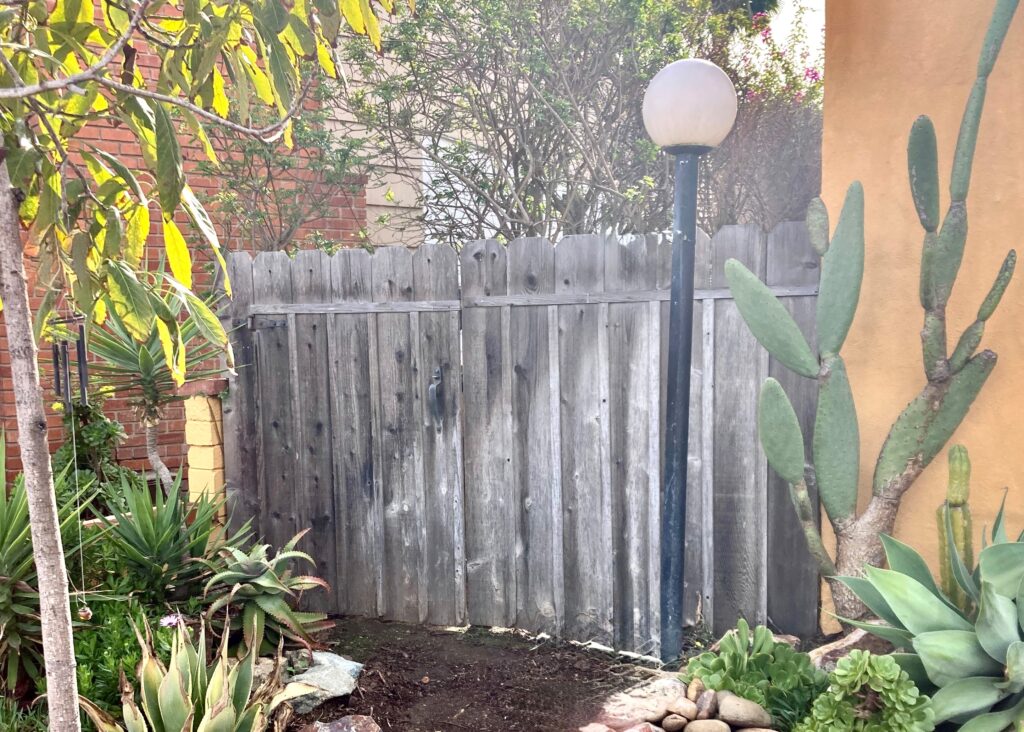
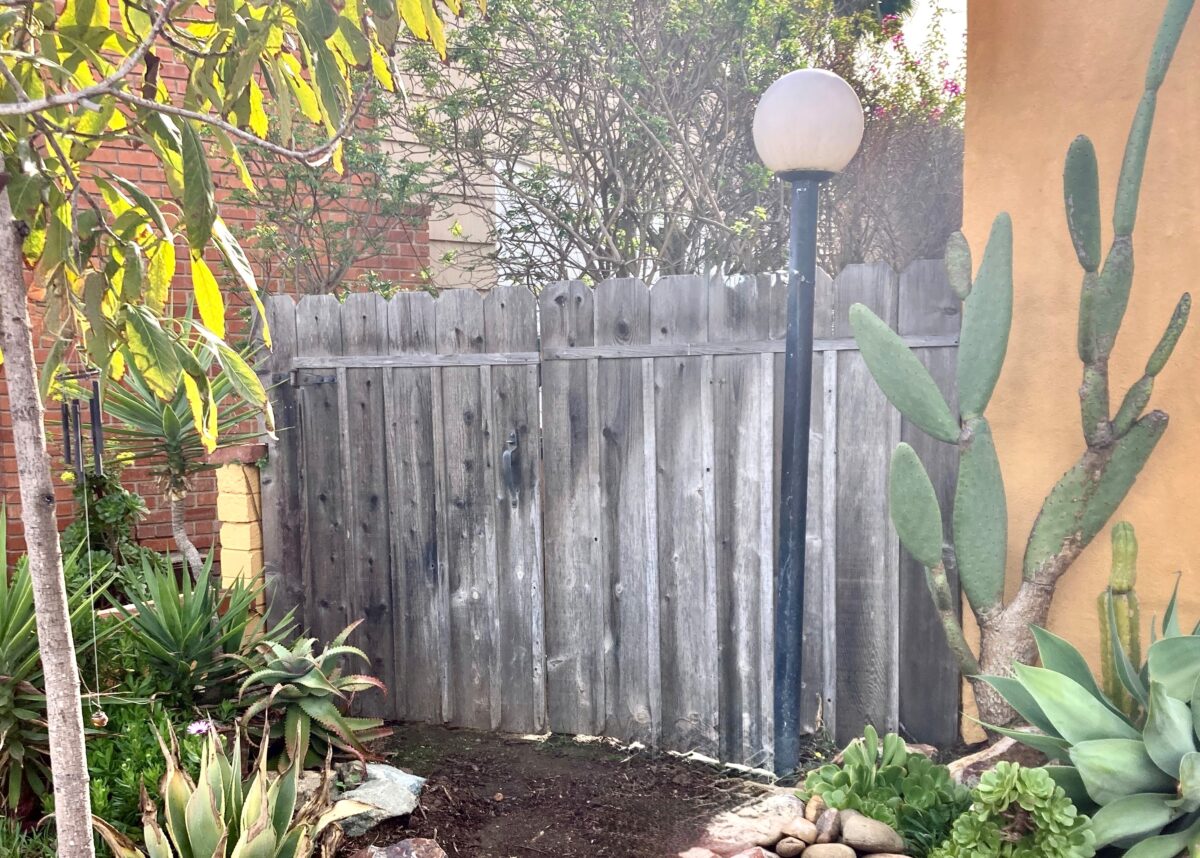
If this old fence ignited in a wildfire, it could bring flames to a wood window frame three feet away. Tree branches and other close plants could also be moved out of the five-foot zone zero next to the structure to increase fire safety.
Is vinyl fencing better than wood? It is supposed to be relatively fire-resistant and more difficult to ignite. If it does ignite, it may burn slowly, releasing less heat than some other materials. However, we’ve been told that burning vinyl could produce toxic fumes including hydrogen chloride which might spread the fire further and cause respiratory problems for residents and firefighters. Consider non-combustible materials like steel or wrought iron for your fence replacement. You could also investigate possible flame resistant-coating/primer at the link below. As always, do your own research!
Other possible ladders include flammable vegetation like tall grasses, shrubs and any tree branches that come within ten feet of a structure, allowing flames to climb up to your home. This potentially lets a “ground fire” become a more destructive and rapidly spreading “crown fire.” Solution? Prune back branches at least 10 feet from your home. Remove combustible plants, mulch and debris in “Zone Zero” – the first five feet from flammable structures. Instead of wood mulch, consider hard scape such as pavers, concrete or rocks in this area. Shredded redwood i.e. “gorilla hair” mulch has been reported as less flammable if you keep it well-irrigated with overhead watering, but how many of us are doing that with our water rates?
Two lists on Kensingtonfiresafe.org may help your efforts to reduce flammable yard growth: one lists landscape designers who completed a fire-resistant gardening course. The second list includes Kensington-resident recommended gardeners and landscapers.
What else can I do if it’s inevitable that we’ll have a fire eventually?
One of our KFS members took part in “Home Inspection Zone” training that’s normally given to firefighters, and had some additional and very specific recommendations:
- 1/8” screening over eve, gable and ridge vents and any opening to crawl space or, check out Vulcan Vents which are supposed to close up when heated.
- Clean up roof, gutters and other sites of accumulated debris and leaves. Where they’ve collected is where burning embers are likely to fall.
- Weather strip exposed nooks and crannies
- In the event of a fire and possible evacuation:
- Move cushions, plastic or wooden patio furniture, door mats, umbrellas, trash cans, cars, RVs and anything else that’s flammable away from your home
- Close all windows and doors; leave outside lights on
- Turn off propane tanks
- Grab your pre-prepared list of who grabs what. You don’t want to spend precious time deciding that now.
And next month will be the anniversary of the Montezuma fire where we lost a house just across Fairmount Avenue in Alvardo Estates. A good reminder that it can happen here!
Links to learn more:
CALFIRE’s wildfire safety steps: https://readyforwildfire.org/prepare-for-wildfire/hardening-your-home/
Fire-resistant Fencing and Gates by Marin Fire Safe. https://firesafemarin.org/harden-your-home/fire-resistant-fencing/
Paint wooden fences or structures with FireGuard flame resistant coating/primer. https://shieldindustries.com/fireguard/
Eco-appropriate Homescaping for Wildfire Resilience: compare specific retrofits to cost and priority for safety. https://defensiblespace.org/house/house-upgrade/
FireIce is a spray-on formula that creates an oxygen-blocking gel to starve a fire of oxygen, and is supposed to be safe for people and plants. It’s expensive but apparently available to homeowners in an aerosol spray, a home defense unit for pressure washers, and also refillable fire extinguishers from their website, Amazon or other distributors. www.fireicesolutions.com